Love Algorithm
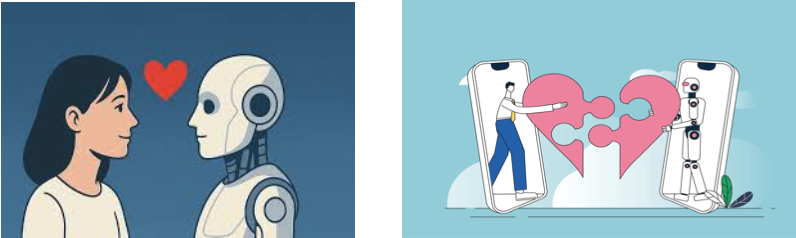
“Ask anything I’m here for you always”
The reply appears instantly, no misunderstanding, no emotional distance, just the exact words needed are delivered. The only problem is that the sender does not exist because on the other side of the conversation, there is no person, only code.
Artificial intelligence (AI) has quickly become part of everyday life, but its role in romantic and emotional relationships is growing significantly. AI began as a simple chatbot to answer questions and provide information. However, in recent times they are gradually taking roles as partners, and sources of emotional support. Applications, such as Replika and Character AI provide engaged interaction and companionship, and services like Anima AI and Gatebox market themselves as virtual romantic companions. AI usage is particularly high among youth and teenagers, they turn to AI because it is accessible, easy and provides instant interaction.
AI companions are reliable, constant and personalised. It learns your habits, remembers your preferences and precise details that humans may forget, responds with empathy, is available 24 hours a day and never argues or rejects you. Users can share thoughts, fears, and daily experiences without fear of criticism or judgement. Humans seek connection, and when something responds in an understanding and empathetic way the brain processes that response as genuine interaction. Research indicates that about 25% of people are willing to engage in AI romantic relationships. Individuals report getting attached, and in a few cases they interact daily and share feelings and thoughts just like real relationships. It provides constant reassurance and validation that fits individual needs.
But is all this love, or just comfort?
AI in romantic contexts often creates one-sided relationships similar to parasocial bonds, in which individuals form deep connections while the AI has no consciousness, emotions, or independent thoughts and therefore cannot reciprocate. Such attachments are strengthened by anthropomorphism, when users perceive AI to have human qualities and begin to treat AI as though it were a human. AI relationships are controlled by the user. The person decides when to interact, sets the tone for conversation and decides how personal the discussion should be. AI begins to adapt to individual preferences and repeated interactions builds attachment and creates a sense of security.
How safe and ethical is this relationship?
AI is developed by companies that have access to users’ data including personal data, this leads to privacy issues and individual data can be leaked or be used for exploitation. Companion apps are designed to increase engagement and encourage attachment, this leads to the user becoming dependent because it benefits the platform. AI companions also create unrealistic expectations and influence how people perceive human relationships. Individuals expect a perfect relationship with no arguments. Regular exposure to consistent and positive interaction can make real relationships feel more demanding. AI can provide harmful and misleading information, which the user may trust and follow. When AI temporarily stops working for a few minutes, many users report feelings of anxiety, frustration, and even panic because these systems often provide constant availability and reassurance, their sudden absence can feel similar to losing contact with a close partner.
AI relationships can feel real but they are built on a code, not emotion.Technology is no longer a tool it has become something we use as emotional support. Convenience and comfort of AI relationships should not replace real human relationships. Individuals should learn to balance technology and personal life.
The danger isn’t that AI feels real, it’s that we start forgetting what real feels like.